That sticky, sweet tension — the kind that pulls at your fingertips before you even touch the crust — still takes me straight to a kitchen in October, 2012. The air was crisp, smelling faintly of woodsmoke from a neighbor’s yard, but inside, it was all about the sugar. I remember standing over a springform pan, holding a ziplock bag of crushed cookies like it was a weapon. The house was quiet, too quiet for a Halloween prep night, and I was trying to create something that looked like it had been spun by a giant, eight-legged architect.
It wasn’t about being scary. It was about the surprise. The moment you slice into a dense, creamy center and see those delicate white lines radiating outward, like a trap set for the unwary. My kids had come in, rubbing sleep from their eyes, and when they saw the finished product sitting on the counter under the dim light, they didn’t scream. They just stared. One of them reached out to touch the icing, then pulled back, laughing at the absurdity of eating a dessert that looked like a bug’s home.
I’ve made cheesecakes for years. I’ve ruined batches where the cracks were too wide, and I’ve burned bottoms that tasted like regret. But this one? This one stuck. It’s not because it’s complicated. Honestly, it’s three steps if you don’t count the chilling time. It’s because it turns a classic comfort food into a conversation starter. You know how some desserts just feel like a hug? This one feels like a playful prank.
I still make it every year. Not because I have to, but because I love the way the contrast looks — that dark, crumbly base against the pristine white web. It’s simple, it’s creamy, and it fits perfectly into a spooky theme without trying too hard. Let’s face it, Halloween desserts often go too far into the artificial coloring department. This one relies on texture and pattern instead. It’s elegant in a weird way, like a spider’s silk is elegant.
The recipe stays in my head because it’s reliable. You don’t need a stand mixer if you don’t want one. You don’t need fancy piping bags. Just a spoon, a bag of cookies, and a little patience. And when you serve it, you’ll see that look on people’s faces again. The one that says, “Wait, is that edible?” Yes. It is. And it’s going to be your new favorite way to celebrate the season.
Why You’ll Love This Recipe
This creamy spider web cheesecake isn’t just another Halloween treat that looks good but tastes like cardboard. It’s the result of a few years of trial and error in my own kitchen, where I learned that the best spooky desserts are actually just really good classic desserts with a fun twist. I’ve tested this recipe with different types of cream cheese and various cookie bases to get the texture exactly right — dense enough to hold its shape, but light enough to melt in your mouth.
Here is why this recipe has earned a permanent spot in my rotation:
- Quick & Easy: Most of the work is passive. You mix the crust, you whip the filling, and you drizzle the web. The rest is just waiting. It comes together in under 30 minutes of active prep time, which is perfect for busy weeknights or last-minute Halloween parties.
- Simple Ingredients: You likely already have everything in your kitchen. Cream cheese, sugar, eggs, vanilla, and dark cookies. No fancy grocery trips needed for obscure ingredients. It’s pantry-friendly and stress-free.
- Perfect for Halloween: It’s the ideal centerpiece for a spooky gathering. Whether you’re hosting a trick-or-treat party or a cozy dinner with friends, this cheesecake fits the theme without feeling childish.
- Crowd-Pleaser: It gets rave reviews from kids and adults alike. Kids love the spider web design, and adults appreciate the rich, classic cheesecake flavor underneath. It’s a win-win.
- Unbelievably Delicious: The texture is next-level comfort food. The contrast between the crunchy, dark cookie crust and the smooth, vanilla bean cream cheese filling is what makes this recipe stand out. It’s not just good—it’s the kind that makes you close your eyes after the first bite.
What makes this different from other versions you might find online? Many recipes try to make the web too thick or use gel colors that taste artificial. This version uses a simple white chocolate or icing sugar glaze that sets into delicate, realistic threads. It’s a creative twist on the classic cheesecake that adds visual drama without adding complex techniques. It’s comfort food reimagined for the season—faster, but with the same soul-soothing satisfaction. It’s perfect for impressing guests without stress, or turning a simple meal into something memorable.
What Ingredients You Will Need
This recipe uses simple, wholesome ingredients to deliver bold flavor and satisfying texture without the fuss. The key here is quality. Since there are only a few components, each one matters. The cream cheese needs to be full-fat for that rich mouthfeel, and the cookies need to be dark enough to provide a stark contrast to the white web.
- Dark Cookies (for the crust): I recommend using Oreo cookies (removed from the cream filling) or dark chocolate sandwich cookies. The dark color is essential for the visual impact of the web. You’ll need about 2 cups of crumbs. If you can’t find dark cookies, you can mix half chocolate graham crackers and half cocoa powder, but the contrast won’t be as sharp.
- Unsalted Butter: You’ll need 1/2 cup (115g) of melted butter to bind the crust. Unsalted is best so you can control the saltiness. I use high-quality European-style butter for a richer flavor.
- Cream Cheese: Two 8-ounce blocks (450g) of full-fat cream cheese. This is non-negotiable. Low-fat versions will result in a watery, grainy texture. Let them sit at room temperature for at least an hour before mixing. I prefer Philadelphia brand because it whips up consistently smooth, but any good quality brick-style cream cheese will work.
- Granulated Sugar: 3/4 cup (150g) of white sugar. This balances the tang of the cream cheese. You can substitute with coconut sugar for a slightly healthier option, but it will darken the filling.
- Heavy Cream: 1/2 cup (120ml) of cold heavy whipping cream. This adds air and lightness to the cheesecake, making it less dense than a traditional baked version. Some no-bake recipes use pudding mix, but I find fresh cream gives a cleaner, more professional taste.
- Eggs: Two large eggs, room temperature. These help set the structure. If you have an allergy, you can try a commercial egg replacer, but the texture will be slightly different.
- Vanilla Extract: 1 teaspoon of pure vanilla bean paste or extract. Paste is better because you can see the little black specks, which adds a nice visual detail in the cream cheese filling.
- White Chocolate or Powdered Sugar: For the web. I recommend using white chocolate chips melted with a little coconut oil for a glossy, hard-setting web. Alternatively, you can mix powdered sugar with a tiny bit of milk to make a thick icing. White chocolate gives a more professional, restaurant-quality finish.
- Food Coloring (Optional): A drop of black or green food coloring can be added to the white chocolate if you want a more dramatic, spooky look. But honestly, plain white looks elegant and less artificial.
Equipment Needed
You don’t need a fancy kitchen to make this. Here is what you’ll need:
- 9-inch Springform Pan: This is essential for easy removal. Make sure the bottom latch is tight to prevent leaks. If you don’t have one, a regular round cake pan works, but you’ll need to line it with parchment paper.
- Food Processor or Ziplock Bag: To crush the cookies. A food processor is faster, but a rolling pin and a heavy bag work well if you want to avoid washing extra dishes.
- Mixing Bowls: One large bowl for the cream cheese mixture and one medium bowl for the cream.
- Hand Mixer or Stand Mixer: A hand mixer is sufficient. Just make sure the beaters are clean and dry.
- Piping Bag or Small Ziplock Bag: For drizzling the web. A small ziplock bag with a corner snipped off works perfectly. No need to buy a fancy piping tip.
- Spreader or Offset Spatula: To smooth the top of the cheesecake. A butter knife works in a pinch.
If you’re on a budget, the ziplock bag method for crushing cookies is the most cost-effective. For the web, using white chocolate chips is cheaper than buying pre-made icing. Just ensure your springform pan is in good condition; a leaky pan will ruin the crust.
Preparation Method
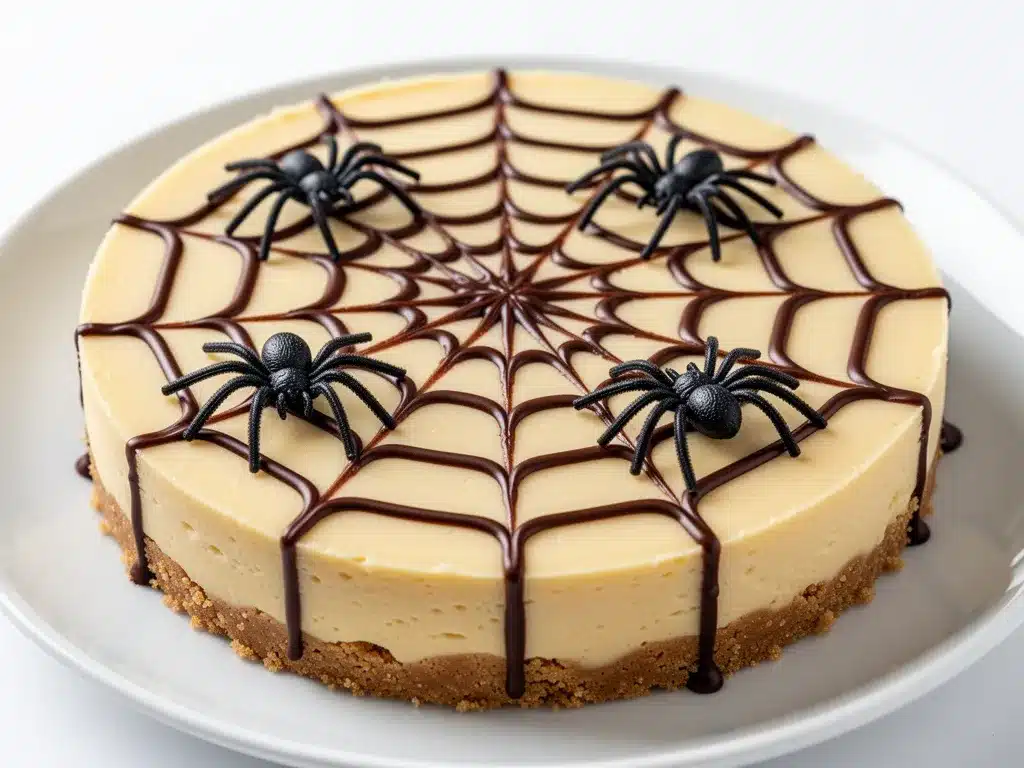
Follow these steps carefully to ensure a smooth, crack-free cheesecake with a beautiful web.
- Prepare the Crust (10 minutes): Preheat your oven to 325°F (165°C). If you’re using a food processor, pulse the dark cookies until they are fine crumbs. If using a bag, crush them with a rolling pin until they resemble sand. Melt the 1/2 cup of butter and mix it with the crumbs until the texture looks like wet sand. Press this mixture firmly into the bottom and slightly up the sides of the springform pan. Use the bottom of a glass to pack it down tightly. Bake for 8-10 minutes until it smells toasty. Let it cool completely. Tip: A compact crust prevents crumbling when you slice.
- Make the Filling (15 minutes): In a large bowl, beat the softened cream cheese on medium speed until smooth and creamy. This takes about 2-3 minutes. Scrape down the sides of the bowl. Add the sugar and vanilla. Beat on low speed until combined. Do not overmix once the sugar is added, or you’ll incorporate too much air, which can cause cracks. Add the eggs one at a time, mixing on low speed just until blended. Warning: Overmixing after adding eggs introduces air bubbles that expand in the oven and cause cracks.
- Whip the Cream (2 minutes): In a separate cold bowl, whip the heavy cream to stiff peaks. This adds lightness. Gently fold the whipped cream into the cream cheese mixture using a spatula. Use a gentle motion, like you’re folding a blanket, to keep the air in the cream. The mixture should look fluffy and uniform.
- Pour and Bake (45-50 minutes): Pour the filling over the cooled crust. Smooth the top with a spatula. Bake at 325°F (165°C) for 45-50 minutes. The edges should be set, but the center should still jiggle slightly like Jell-O when you shake the pan. This is crucial. If it’s firm, it’s overbaked. Turn off the oven and leave the cheesecake inside with the door cracked open for 1 hour. This gradual cooling prevents cracking.
- Chill (4+ hours): Remove from the oven and let it cool to room temperature. Then, refrigerate for at least 4 hours, preferably overnight. The cheesecake needs to be fully set before you add the web. If it’s warm, the web will melt.
- Create the Web (10 minutes): Melt the white chocolate according to package directions, stirring in a teaspoon of coconut oil for a thinner consistency. Transfer to a small ziplock bag and snip off a tiny corner. Hold the bag about 1 inch above the center of the cheesecake. Squeeze gently to make a small dot in the center. Then, move the bag in a circular motion, increasing the radius with each circle, while squeezing steadily. You want concentric circles connected by radial lines. It takes practice. Don’t worry if it’s not perfect; the imperfections make it look more like a real spider web. Let the web set for 10 minutes before slicing.
Cooking Tips & Techniques
Making a no-bake or lightly baked cheesecake requires a bit of finesse. Here are some pro tips to ensure success.
- Room Temperature is Key: Cold cream cheese creates lumps that are impossible to whip out. Take your cream cheese and eggs out of the fridge at least an hour before you start. If you’re short on time, you can microwave the cream cheese in 5-second bursts, but be careful not to melt it.
- Don’t Overbeat: Once you add the eggs, mix on the lowest speed possible. Overmixing incorporates air, which leads to a puffy, then collapsing, cheesecake. You want a dense, creamy texture.
- The Water Bath Trick: If you’re worried about cracks, place the springform pan in a larger roasting pan filled with an inch of hot water. This creates a steamy environment that bakes the cheesecake gently. Wrap the bottom of the springform pan in heavy-duty aluminum foil to prevent water from seeping in.
- Patience with the Web: The web is the most technical part. If the chocolate is too thick, it will blob. If it’s too thin, it will run. Test on a piece of parchment paper first. If it doesn’t hold its shape, add a little more coconut oil or microwave for 5 more seconds.
- Common Mistake: Slicing too soon. If you cut the cheesecake before it’s fully chilled, the web will smear, and the slices will fall apart. Let it chill for at least 6 hours for the cleanest slices.
Variations & Adaptations
This recipe is flexible. Here are a few ways to adapt it to your needs.
- Gluten-Free Option: Use gluten-free dark chocolate sandwich cookies or gluten-free graham crackers for the crust. Ensure your cream cheese and white chocolate are certified gluten-free.
- Dairy-Free Option: Use vegan cream cheese blocks (like Miyoko’s or Kite Hill) and coconut cream instead of heavy cream. Note that vegan cream cheese can be wetter, so you may need to chill it longer.
- Flavor Twist: Add 1/2 teaspoon of peppermint extract to the filling for a mint-chocolate vibe. Or, use chocolate cookies and green food coloring in the web for a “slime” look.
- No-Bake Version: If you skip the baking step entirely, use 1 teaspoon of gelatin bloomed in cold water, melted and mixed into the cream cheese base. This will help it set without heat. Chill for 8+ hours.
Serving & Storage Suggestions
Serve this cheesecake chilled. It pairs well with a cup of black coffee or a glass of red wine. For presentation, dust the plate with cocoa powder before placing the slice. This adds a spooky touch and prevents the slice from sticking.
Store leftovers in the refrigerator, covered tightly with plastic wrap, for up to 5 days. The web may soften in the fridge, but the flavor remains excellent. You can also freeze individual slices for up to 2 months. Thaw in the fridge overnight. If the web gets too soft, you can touch it up with a little melted white chocolate.
Nutritional Information & Benefits
This creamy spider web cheesecake is a rich dessert, so moderation is key. Each slice (1/12 of the cake) contains approximately 350 calories. It is high in fat due to the cream cheese and butter, but also provides calcium and protein. The dark cookie crust adds fiber, especially if you use whole-grain dark cookies. For a slightly healthier twist, you can reduce the sugar by 1/4 cup, though it may affect the texture. It is not suitable for vegans unless adapted. Always check labels for allergens like dairy and gluten. Personally, I view this as a special occasion treat, not a daily snack, and I enjoy it as a mindful dessert experience.
Conclusion
This creamy spider web cheesecake is worth the effort because it combines classic comfort with seasonal fun. It’s not just a dessert; it’s a centerpiece that sparks joy and conversation. I love making it because it’s forgiving and visually stunning. You can customize the web, the crust, and the filling to suit your taste. I encourage you to try it this Halloween and share your results. Did your web turn out perfect? Or did it look more like a tangled mess? Either way, it’s delicious. Let me know in the comments how it went! Happy baking, and enjoy your spooky sweet treat.
FAQs
Can I make this cheesecake a day ahead?
Yes, this is actually better. The flavors meld overnight, and the texture sets perfectly. Make it the night before for the best results.
Why did my web crack?
The web usually cracks if the chocolate was too thick or if the cheesecake surface was too cold and rigid. Let the web sit for a minute after drizzling to ensure it adheres. If it cracks, it still tastes good!
Can I use a different cookie?
You can use any dark cookie. Chocolate graham crackers, digestive biscuits, or even dark chocolate wafer cookies work well. Just ensure they are dark enough to contrast with the white web.
How do I fix a cracked cheesecake?
If the cheesecake itself cracks, you can cover the cracks with extra whipped cream or a few whole cookies. But if you follow the cooling instructions carefully, cracks should be minimal.
Is white chocolate necessary for the web?
You can use powdered sugar icing, but it won’t set as hard. White chocolate provides a glossy, durable web that holds its shape better when sliced.
Pin This Recipe!
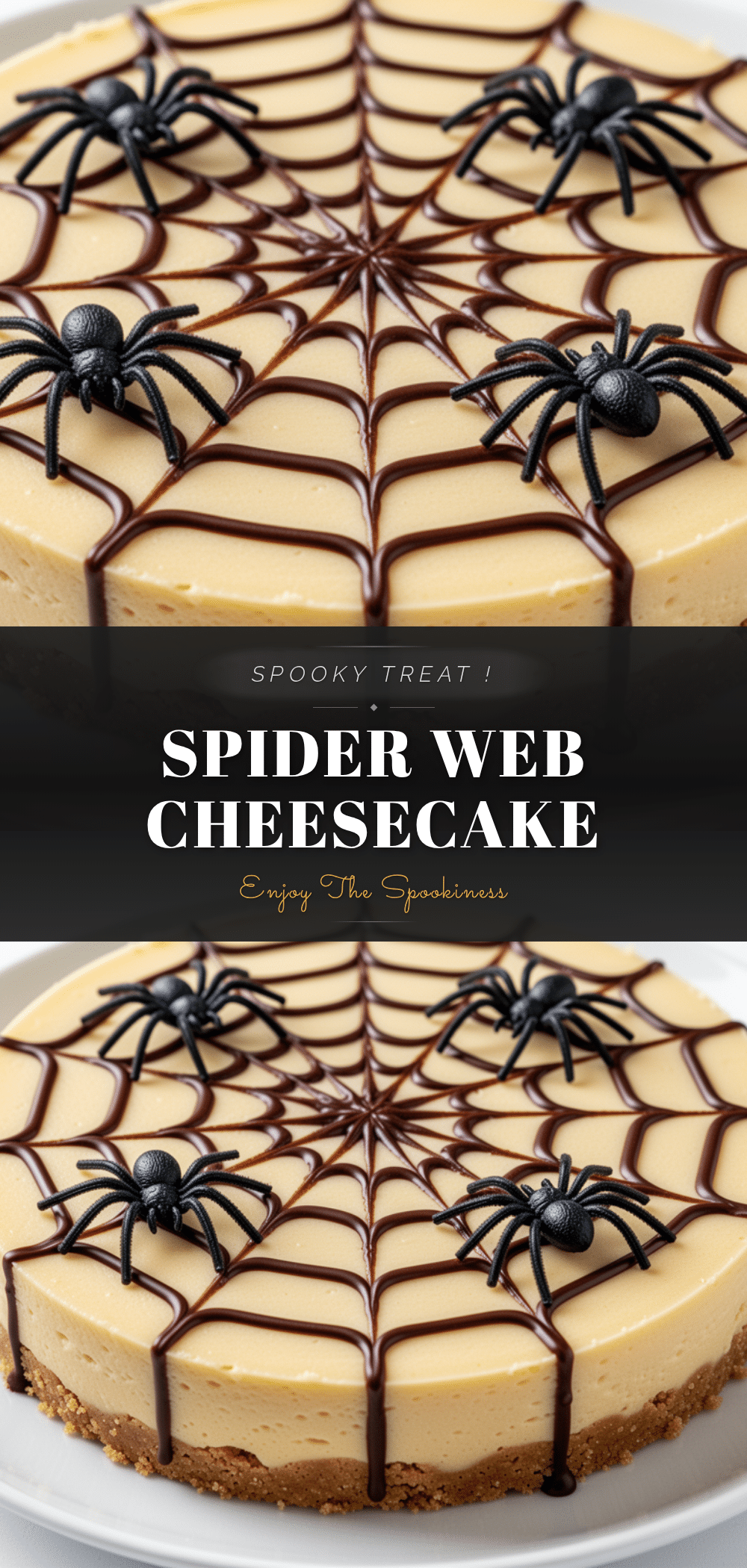
Creamy Spider Web Cheesecake: 3-Step Halloween Dessert
A visually stunning Halloween dessert featuring a dark cookie crust, a dense and creamy vanilla cheesecake filling, and a delicate white chocolate spider web design on top.
- Prep Time: 30 minutes
- Cook Time: 50 minutes
- Total Time: 5 hours 20 minutes
- Yield: 12 servings 1x
- Category: Dessert
- Cuisine: American
Ingredients
- 2 cups dark cookie crumbs (e.g., Oreos without cream filling)
- 1/2 cup (115g) unsalted butter, melted
- 2 blocks (450g) full-fat cream cheese, room temperature
- 3/4 cup (150g) granulated sugar
- 1 teaspoon vanilla bean paste or extract
- 2 large eggs, room temperature
- 1/2 cup (120ml) cold heavy whipping cream
- 1 cup white chocolate chips
- 1 teaspoon coconut oil (for the web)
- Food coloring (optional, black or green)
Instructions
- Preheat oven to 325°F (165°C). Mix cookie crumbs with melted butter until resembling wet sand.
- Press the crust mixture firmly into the bottom and slightly up the sides of a 9-inch springform pan.
- Bake the crust for 8-10 minutes until toasty, then let it cool completely.
- In a large bowl, beat the softened cream cheese on medium speed until smooth (2-3 minutes).
- Add sugar and vanilla, beating on low speed just until combined.
- Add eggs one at a time, mixing on low speed just until blended. Do not overmix.
- In a separate cold bowl, whip heavy cream to stiff peaks.
- Gently fold the whipped cream into the cream cheese mixture until uniform and fluffy.
- Pour filling over the cooled crust and smooth the top.
- Bake at 325°F (165°C) for 45-50 minutes until edges are set but the center jiggles slightly.
- Turn off the oven and leave the cheesecake inside with the door cracked for 1 hour to cool gradually.
- Remove and cool to room temperature, then refrigerate for at least 4 hours (preferably overnight) until fully set.
- Melt white chocolate with coconut oil. Transfer to a small ziplock bag with a snipped corner.
- Drizzle the chocolate in concentric circles connected by radial lines to create a spider web pattern.
- Let the web set for 10 minutes before slicing.
Notes
Ensure cream cheese and eggs are at room temperature to prevent lumps. Do not overmix after adding eggs to avoid cracks. The cheesecake must be fully chilled before adding the web to prevent melting. For a water bath method to prevent cracking, place the springform pan in a roasting pan with hot water.
Nutrition
- Serving Size: 1 slice (1/12 of cak
- Calories: 350
- Sugar: 18
- Sodium: 250
- Fat: 28
- Saturated Fat: 16
- Carbohydrates: 22
- Fiber: 1
- Protein: 6
Keywords: Halloween dessert, spider web cheesecake, no-bake cheesecake, easy Halloween treats, cream cheese dessert, spooky sweets